Autism and Down syndrome come together in people’s minds, particularly in reference to developmental conditions. Many people think both are the same because they can affect communication, learning, and behavior.
In fact, autism and Down syndrome are distinct, different types of disorders with different causes, features, and support requirements.
Understanding the difference is important because it helps families, teachers, and caregivers provide the appropriate type of support. It also helps minimize the confusion and avoid common myths of both conditions.
What Is Autism?
Autism is also known as autism spectrum disorder (ASD) and is a developmental disorder that can impact a person’s ability to communicate, interact socially, learn, and process their environment. The term autism refers to the “spectrum” of conditions, and one person’s symptoms may differ greatly from another’s.
Some people with autism require extensive support in their daily lives, others can live independently, and many can live on their own in the community with the aid of some support.
People with autism might experience some of these:
- Problems communicating with others
- Delayed speech or communication problems
- Repeated behaviors/routines
- Sensitivities to light, sound, or touch
What is Down Syndrome?
A genetic disorder in which there is an extra 21st chromosome is known as Down syndrome. This additional chromosome impacts physical growth, brain development, and learning capacities.
Unlike autism, there are often physical attributes that are obvious at birth that help doctors detect the presence of Down syndrome.
Some common features of Down syndrome include:
- Distinct facial features
- Low muscle tone
- Delayed physical development
- Learning difficulties
- Speech and language delays
The primary distinction between autism and Down syndrome is that the symptoms of autism are not as noticeable or distinct as those of Down syndrome.
The Main Difference Between Autism and Down Syndrome
Autism is associated with variations in brain development and function. The exact cause remains unknown, but it is likely to be genetic and environmental.
Down syndrome, however, is a genetic disorder due to an extra chromosome. It is found at birth and can be detected by a genetic test.
The other significant difference is the physical appearance. Both people with Down syndrome and autistic individuals do not necessarily share physical characteristics; however, people with Down syndrome often share some physical characteristics, and autistic individuals do not necessarily have physical characteristics associated with autism.
Can Someone Have Both Conditions?
Yes, someone can be both an autistic and a person with Down syndrome. This is referred to as a “dual diagnosis.”
Sometimes a child exhibits symptoms of both disorders, including developmental delays, communication issues, repetitive behaviors, and sensory issues.
Autism can sometimes be more challenging to spot initially, as some symptoms are similar to those of children with Down syndrome.
Similarities Between Autism and Down Syndrome
They are two different conditions, but they share similarities.
Developmental Delays
Autism and Down syndrome can delay children in reaching some developmental milestones, such as learning, speaking, or social interaction.
Communication Challenges
These two conditions can have an impact on the ability to speak and communicate. Some people may not know how to communicate effectively or read body language.
Need for Structured Support
At home and or in social interactions, many patients need routine, therapy, education, and gentle instruction.
Social Difficulties
They can sometimes have difficulties in social situations, whether it is due to autism or Down syndrome; the reasons are different.
How Are They Diagnosed?
Autism Diagnosis
A behavioral and developmental evaluation gives the diagnosis of autism. Specialists observe communication, social interaction, behavioral patterns, and sensory responses.
There is no one test to diagnose autism.
Down Syndrome Diagnosis
It is possible to often detect Down syndrome through prenatal testing or shortly after birth by physical characteristics and chromosome testing.
Treatment and Support Options
There is no “cure” for Down syndrome and autism. Support services can assist people to develop their everyday skills, communication, and independence; however.
Support may include:
- Speech therapy
- Occupational therapy
- Physical therapy
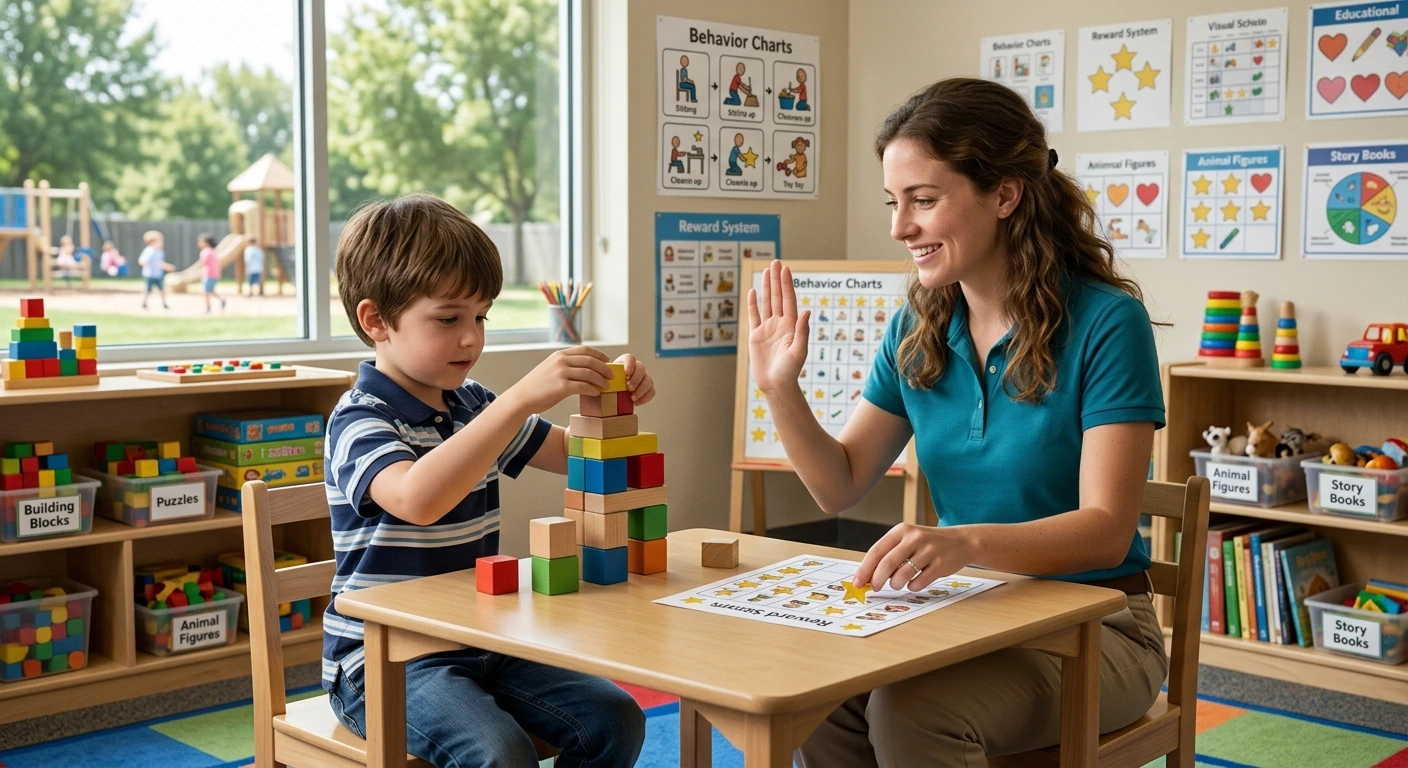
- Behavioral therapy
- Educational support programs
The appropriate support plan will vary for the person depending on their strengths, challenges, and individual needs.
For instance, the sensory-under-stimulated environment is helpful for a child with sensory sensitivities, and the focus on speech or motor skills is helpful for a child with Down syndrome.
Why Early Support Matters
People born with developmental conditions can benefit from early support. Educational programs and professional advice can be utilized if problems are identified early, and therapy can be available at the same time.
Families don’t need to be frightened or concerned if a person doesn’t develop into a normal individual. All individuals develop at their own pace. However, if there are any concerns about communication, social interaction, or developmental delays, it’s important to discuss them with a health care provider.
Avoiding Misunderstandings and Labels
The first rule is don’t make assumptions about any autistic or Down syndrome person, and don’t think that these two are the same. All individuals are unique.
Some require daily help and support, while others grow up to be very independent adults. Many individuals with autism or Down syndrome possess valuable talents, unique personalities, creativity, and valuable skills that are not always recognized.
Respectful language and an understanding rather than stereotypical language can help build an environment that is supportive for all.
Final Thoughts
Are autism and Down syndrome the same? No, they are distinct sets of conditions with distinct causes and characteristics. The primary domains in which autism impacts are communication, behavior, and sensory processing, while Down syndrome is a genetic disorder that affects physical and intellectual growth. While there are some parallels, each person’s symptoms are unique. Understanding, support, and acceptance are the most crucial factors in the recovery process.