Families of children with autism spectrum disorders in the United States usually feel extremely overwhelmed following the information about the health of their kids. The question that usually comes up first and is among the commonly raised ones is “At which point should I start treating my child using ABA?” Why does it matter? The answer will significantly impact your child’s ability to communicate.
As discussed before, ABA refers to the process of using behavioral modification techniques to facilitate learning. It simply adjusts based on age and needs. The issue of the ABA therapy age limit actually revolves around tsessionhe changes in learning processes as a person develops.
What Does ABA Therapy Mean for Autism Treatment
Applied Behavior Analysis is a scientific and systematic approach to improving children’s behavior and language skills. Unlike guesswork about the child’s requirements, the therapy observes his behavior and develops specific training strategies.
The Process of Shaping Behavior through ABA Therapy
The Applied Behavior Analysis teaches skills gradually. Thus, instead of focusing on having a child speak full sentences from the very beginning, the process starts from eye contact, producing sounds, and saying single words.
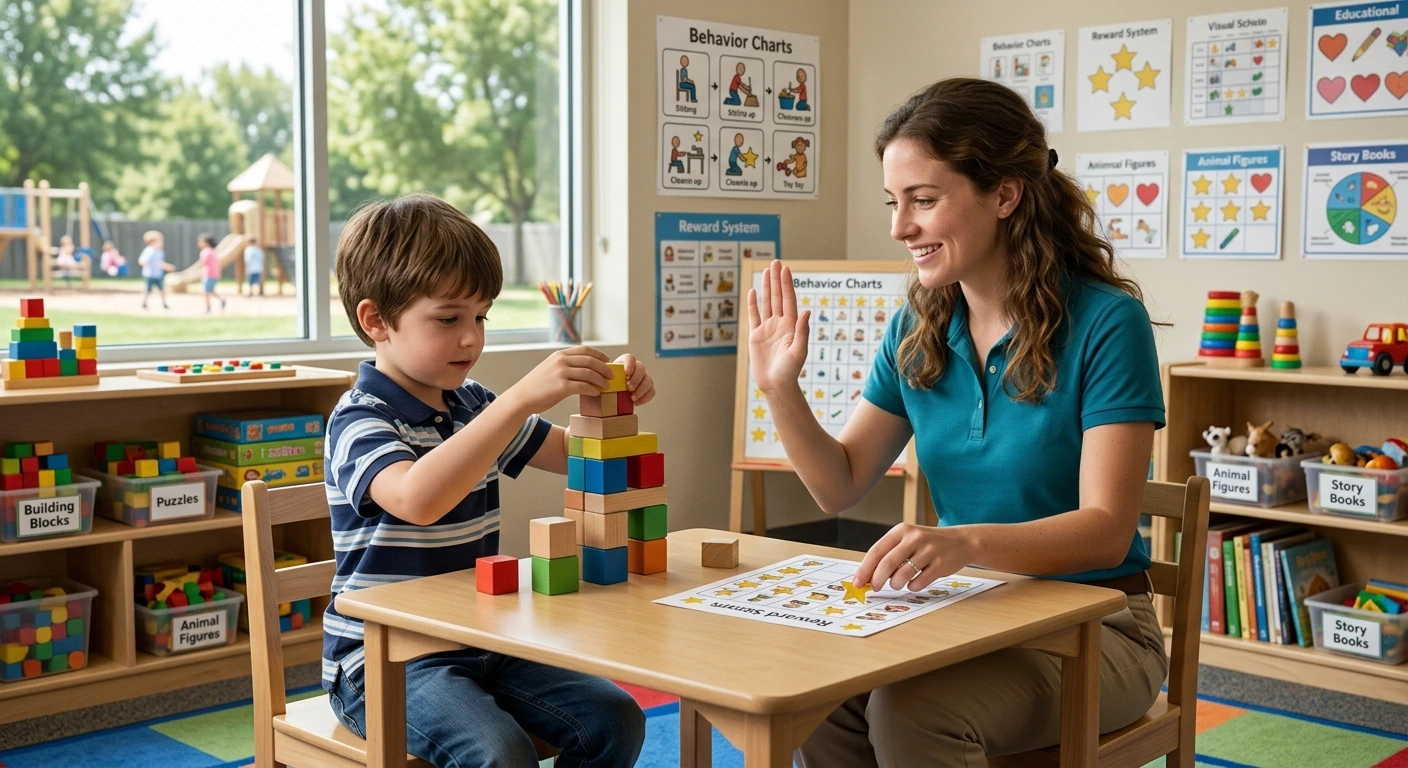
Every successful achievement gets rewarded. The child learns that specific behavior produces certain results. Gradually, the therapy helps develop more complex skills in speaking, socialization, self-control, and performing basic activities independently.
Why It Is Widely Used in the USA
Applied Behavior Analysis has been proven by numerous scientific studies and delivers measurable results. Parents and professionals use Applied Behavior Analysis because it allows for objective evaluation of progress.
Parents find Applied Behavior Analysis most helpful because it focuses on practical life skills. It does not teach the child theoretical things but enables him to be independent.
Age When It Is Most Effective (18 Months to 5 Years)
The best results from Applied Behavior Analysis are achieved when it is applied between 18 months and 5 years of age. At this period, kids develop very quickly.
Why Early Childhood Creates Faster Learning
Children learn through imitation and observation in their formative years. It is quite easy for them to absorb any behavior that surrounds them. Early application of Applied Behavior Analysis could help develop positive behavior before it becomes ingrained as negative behavior.
The child will learn how to request the toy without crying and screaming. Such minor behavioral changes will make things easy for the child and the rest of the family. Preparation at an early age through ABA will help children fit into kindergarten and preschool settings.
Role of Brain Development and Plasticity
One of the biggest reasons early Behavioral therapy works so well is something called brain plasticity. This simply means how flexible the brain is in learning new things. The brain is very flexible at an early age. The brain can learn and form connections easily and will be more receptive to acquiring new skills.
One can picture the process as that of sculpting soft clay. Whatever shapes are formed while the clay is still soft remain permanent. Behavioral therapy takes advantage of this opportunity to establish proper and effective communication skills.
Advantages of Early Intervention for Autism
Beginning Behavioral therapy at an early age is known to provide significant developmental benefits for autistic individuals.
Development of Communication Skills at a Younger Age
A problem that occurs in most autistic kids is communication problems. This guarantees the gradual development of the patient’s communication skills. In fact, the patient can begin with gestures, then move on to using words and sentences, and finally form sentences.
This process will gradually eliminate the behavioral problem of shouting and being violent since the child can now effectively express himself.
Behavior and Social Improvement
Through ABA treatment, children will also develop social skills. These include looking into the eyes of the person you are talking to and skills for interacting with other people. Some examples are sharing, taking turns, and responding to the other person’s behavior.
ABA Therapy Intensity and Age (2–7 Years)
While age does play a role, the intensity of the treatment is even more crucial for ABA.
Weekly Hours of Therapy Recommended
Generally, it is recommended to provide 25-40 weekly therapy hours. The regularity will allow children to develop skills properly through sufficient repetition. The more often a skill is repeated, the better it will be learned by the child.
Importance of Repetition in Learning
One essential element of Behavioral therapy is repetition. With repeated skills, a child develops an automatic behavior pattern. For instance, when a skill is repeated regularly, it becomes an automatic response over time.
Otherwise, the lack of repetition makes it impossible to form automatic patterns since skills remain unlearned and are used only within therapy sessions.
Minimum Age for ABA Therapy
Though there is no definitive lower age for Behavioral therapy, early signs of autism can manifest at a very young age.
Early Signs of Autism in Babies
Babies aged 6 to 15 months may show early signs such as limited eye contact, no response to being addressed by name, or repeating particular activities. Though these symptoms don’t mean autism, they signal the need for early intervention.
Recognizing early signs allows parents to get their babies treated even before a formal diagnosis.
ESDM and Infant ABA Techniques
The Early Start Denver Model is a combination of ABA strategies incorporated within a program for infants. Unlike the usual behavioral approach, ESDM incorporates everyday routines like playtime, eating, and minimal socialization.
Parental training in facilitating social engagement in normal ways, like eye contact and playing with toys during play time. This early intervention approach can potentially decrease future therapy needs.
Does There Exist an Age Limit for ABA Therapy?
ABA intervention is not confined to any specific age group. It can be used throughout one’s life, though its objectives would differ with age.
ABA Therapy for Teenagers
ABA intervention can be helpful for teenagers in several ways, including academics, emotional regulation, and socialization.
In addition, life skills training, including time management and decision-making, becomes part of the treatment at this age.
ABA Therapy for Adults and Application in Real Life
It is also possible for adults to benefit from ABA intervention in the acquisition of daily skills, vocational preparation, and communication. Some adults could be taught to cope with workplace behavior or work-related stress or to develop daily routines.
ABA intervention might help replace undesirable behaviors with healthy coping mechanisms that enhance an adult’s ability to cope independently.
ABA Therapy Setting and Outcome
The setting for the therapy process might also have an impact on the outcome.
In-Home ABA Therapy
Treatment in an in-home setting is usual when dealing with young children. This allows a child to develop new skills in a comfortable surroundings where they eat, play, and sleep. Parents are taught skills that they can use during the day.
Center-Based ABA Therapy
Center-based therapy is common when working with older children, as it provides a setting close to the school environment. Here, children learn skills such as following orders, waiting their turn, and interacting with other children.
Conclusion
The age limit of Behavior analytic therapy does not determine the effectiveness of the process itself. Rather, it alters the way the therapy is conducted. The best results will be seen if therapy starts as early as possible, between 18 months and 5 years, since their brains are developing rapidly. On the other hand, Behavior analytic therapy is also beneficial to children and adolescents, as well as adults who need it.