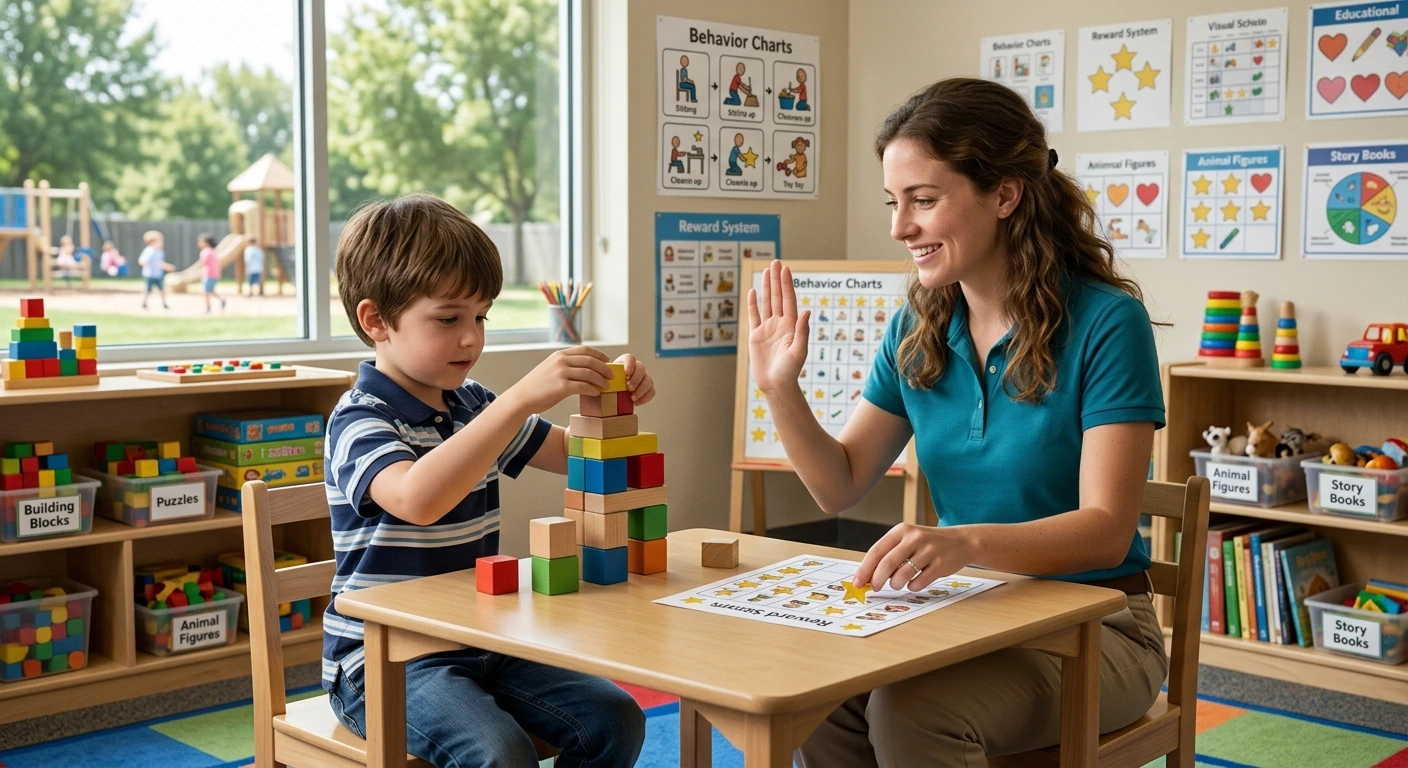
Helping someone with autism requires understanding, patience, and the right therapeutic support. One of the most effective and widely used approaches for individuals with Autism Spectrum Disorder (ASD) is Applied Behavior Analysis (ABA) therapy. Many parents initially feel uncertain after an ASD diagnosis, especially when trying to choose the best treatment, seek proper guidance, and find practical ways to support their child’s development.
The goal of ABA therapy is to improve meaningful behaviors by analyzing how behavior works and teaching essential communication, social, and daily living skills through structured, step-by-step learning. Unlike some approaches that rely on assumptions, ABA is based on observable behavior and is strongly supported by scientific research.
It is for these reasons that parents choose ABA therapy Utah, as it promotes positive growth and development in practical environments such as homes and school settings.
ABA Therapy Significance for Families in Utah
The significance of ABA therapy extends beyond its medical aspects. The families choosing ABA therapy can rely on a strategy that will provide them with a proper understanding of their actions. Each patient is different in their specific diagnosis of autism, and it is challenging for families to understand how they should act with a child.
ABA therapy eliminates this problem by offering an individual program for each specific child. These programs differ in the goals they aim to achieve.
Families admit that the moment of clarity regarding actions was during ABA therapy for the first time.
In ABA therapy, structure is introduced into the family’s life. The parents learn how to respond to the behaviors and reinforce positive behavior.
Core Principles of ABA Therapy
ABA therapy Utah is based on simple yet powerful principles. Behavior always connects to consequences. If a behavior is rewarded, a child is more likely to repeat it. If a behavior does not help them, it tends to decrease over time.
Therapists use this idea to build positive habits. They reward communication, cooperation, and learning. They reduce behaviors that block growth. Another key principle focuses on breaking skills into small steps. Not everything happens at once; rather, it is learned slowly until it is completed successfully.
Consistency is crucial, as the therapist, parent, and educator should take consistent actions so the child does not receive mixed messages.
Why is ABA Effective in Autism Intervention?
ABA therapy is very effective for children suffering from autism since ABA therapy considers that kids learn differently from others. ABA builds around those strengths.
Therapists observe behavior closely. They identify what triggers actions and what motivates the child. Then they design a plan that fits that exact pattern. This method removes confusion. Instead of overwhelming the child, ABA therapy builds confidence through small wins. Each success encourages the next step.
Families also see improvements faster when everyone follows the same system at home and in therapy sessions.
Benefits of ABA Therapy in Utah
Enhanced Communication Skills
Behavioral therapy in Utah helps kids gradually develop effective ways to communicate their needs. Most kids suffering from autism frustrations stem from the fact that they know their desires but are unable to articulate them effectively. This leads to behavioral problems such as crying and task refusal.
In ABA, children learn to communicate incrementally, based on their initial developmental stage. Some start with pointing while others use picture cards. The end goal, however, remains the same: to ensure the child feels heard.
Better Learning and Skill Development
Behavioral therapy in Utah supports learning in a way that feels clear and manageable for children. Rather than having children listen to lengthy instructions, the skills are broken down into extremely small steps, making them more accessible to children.
The repetition of this process allows children to feel focused and motivated as they achieve success more regularly. No matter whether the task is identifying colors, following directions, or performing simple classroom tasks, children systematically perform them.
Children eventually become accustomed to the concept of learning, knowing what to expect from them in various situations. It becomes quite evident to parents as their child begins trying new experiences rather than shying away from them.
Increased Independence in Daily Life
Another important advantage of ABA therapy for children in Utah is its ability to help them learn to handle daily tasks without assistance. The child achieves independence in dressing, tooth brushing, and toy cleaning by the practice of breaking the task into smaller components. The process begins with children needing full help from their therapists because they face difficulties, but eventually their therapists will decrease assistance to help them learn to operate independently.
With increased independence, there comes a significant change in the family environment.
Improved Emotional Regulation
Behavioral therapy in Utah helps children learn to manage their emotions. The autistic person has difficulty staying peaceful during times of high stress because he needs to express himself through spoken words.
The child learns to manage his stress through ABA therapy, acquiring practical techniques he can use throughout his daily activities.
Enhanced Social Interaction Abilities
Applied behavior analysis treatment in Utah helps children feel more at ease when interacting with others by gradually showing them how to do so. The ability to share, take turns, introduce themselves, and interact with other kids is highly difficult to acquire, especially for children who have trouble communicating.
The therapists provide an environment that allows the child to apply the knowledge gained from the training.
After gaining confidence, the child interacts with his siblings, fellow students, and friends. Even saying hello to someone or playing with other children is considered a great achievement for the child.
Lowering Stress in the Family
Behavioral therapy in Utah is also extremely helpful in reducing family stress. As a result of improved communication and behavior control, there is less daily tension.
For the family, there is considerably less strain on the parents, as they no longer have to guess what the children need. Activities such as eating, schooling, and going to bed will be easier to manage.
The advantages of ABA therapy extend to siblings, who get to live in an environment free of stress. Moreover, parents will learn useful advice on handling the situation through ABA therapy.
How ABA Therapy Works in Daily Life
Applied Behavior Analysis in Utah fits into everyday routines. It does not stay limited to clinic sessions. It follows the child into real environments where life actually happens.
Therapists design goals based on daily needs. They focus on skills such as getting ready for school, eating meals, and interacting with peers.
This real-world approach makes learning more meaningful and lasting.
ABA Therapy Settings Available in Utah
ABA therapy in Utah is delivered in different environments that adapt to each child’s specific requirements, family commitments, and educational objectives. The various settings enable different types of progress, which many children need to achieve their goals.
| ABA Therapy Setting | Ideal For | Typical Hours | Considerations |
| In-home | Daily routines, natural learning | Flexible, including evenings | Needs home space |
| Clinic-based | Structured learning, peer skills | Weekdays, daytime hours | Requires travel |
| School-based | Classroom behavior, academics | School hours | Limited availability |
| Community-based | Real-world skills (stores, parks) | Varies by program | Often paired with other settings |
| Telehealth | Parent coaching, remote support | Highly flexible | Needs internet/device |
ABA Therapy Techniques for Autism Spectrum Disorder
The BCBA therapists use several ABA methods in Utah to help children develop their abilities while reducing unproductive behavior through systematic instructional methods.
Discrete Trial Training (DTT)
Discrete Trial Training is a structured educational approach that develops skills in a step-by-step manner. In this form of therapy, a brief learning process is repeated. An initial instruction is presented to the learner, followed by the therapist’s response and feedback.
DTT is effective in developing early skills such as color recognition, naming, imitation, and following instructions. This therapy approach creates expectations for children and provides many opportunities for repetition.
Positive Reinforcement
Positive reinforcement is one of the most effective techniques used in ABA therapy. Positive reinforcement involves using rewards to increase the likelihood of a particular behavior.
The following can be considered as rewards:
- praise
- toys or preferred items
- access to activities
- small breaks
When a child requests help instead of crying, he gets assistance and receives positive feedback.
Prompting and Fading
The prompting process occurs when an individual needs assistance with a particular task. It can involve verbal, visual, or physical cues based on what a child needs.
Once the child begins to understand the process, prompts begin to fade away. This approach is designed to help children perform tasks independently.
Modeling
Therapists employ modeling as one of the basic techniques, demonstrating the correct way to do things to the client. The therapist demonstrates how to greet other people by waving and says, “Say hello.” The method is effective since it is easier for children to learn when they see what to do.
Task Analysis
Task analysis breaks complex skills into smaller, manageable steps. Instead of teaching a full activity at once, each part is taught separately.
For example, washing hands includes:
- turn on the tap
- Wet hands
- Apply soap
- Scrub
- Rinse
- Dry hands
Each phase is repeated until the child feels comfortable. It helps prevent overloading and creates independence.
Shaping (Gradual Progress)
The shaping technique is employed when a child is trying to learn something that they cannot do yet. Rather than waiting for the perfect outcome, therapists reward gradual progress toward the desired behavior.
For example, when teaching speech:
- Any sound is rewarded first
- Then partial words
- Then full words
This technique keeps children motivated because they experience success at every stage of learning.
Natural Environment Teaching (NET)
NET helps children learn skills in real-life situations rather than in structured sessions. Learning happens during everyday activities like play, meals, or outings.
For example:
- asking for snacks during snack time
- learning colors while playing
- Using greetings in real-life situations
This method helps children apply their abilities in the natural settings of home, school, and community, rather than in therapeutic settings.
Generalization (Applying Skill in Various Settings)
Generalization refers to the application of the same ability in diverse settings and by various people.
While a child learns a particular ability in therapy, the objective is to apply it:
- At home
- At school
- In public places
Therapists practice skills across environments so the child becomes flexible and confident in real-life situations.
Role of ABA Therapists in Utah
ABA therapists in Utah oversee the full course of treatment, including “How Long Does ABA Therapy Last?” throughout the process. They monitor behavioral patterns, design intervention strategies, and track progress over time. If a chosen approach does not produce the desired results, ABA therapists adjust by modifying plans and implementing more effective strategies as needed.
The ultimate goal of ABA therapists is to prepare children for life.
Cooperation with Parents and Educators
ABA therapists collaborate actively with both parents and educators. Strategies that yield results are employed throughout different environments. This consistency helps children learn faster. When everyone uses the same approach, confusion decreases.
Parents also receive training. They learn how to reinforce skills at home and support progress between sessions.
Data Tracking and Progress Monitoring
Therapists track progress using clear data. They record how often a behavior happens and how well a child performs a skill. This data guides every decision. It removes guesswork and improves accuracy. Families receive regular updates so they can see real progress over time.
Conclusion
Utah’s ABA therapy provides parents with a roadmap for fostering the growth of their children with autism spectrum disorder. It focuses on developing skills that promote communication, behavioral change, and independence.
Children grow at varying speeds, with the help of therapists who support their development by continually guiding their learning. The role of parents is critical for the success of ABA treatment. Their collaboration with therapists results in greater progress among children. ABA therapy not only changes children’s behavior but also empowers them to be more independent and to socialize better.