Permanent product recording in ABA is a very simple way for therapists to assess a child’s progress by reviewing completed work. This method focuses on the final results of activities such as drawings, written work, puzzles, or other tasks a child finishes. Instead of watching every action, therapists mostly look at the finished product to understand what skills a child has learned or how they are improving.
An ABA therapist Utah can use this information to identify a child’s strengths, pinpoint areas needing more practice, or develop better therapy plans. This method helps parents, caregivers, or therapists work together to support the child’s growth.
What is Permanent Product Recording?
Permanent product recording in ABA helps therapists to understand a child’s progress by checking completed tasks or results. This method helps to track improvements in communication, daily activities, learning skills and independence. Families can also learn more about How ABA Therapy Encourages Independence to see how ABA strategies help children gain confidence and learn important skills for everyday life.
Importance of Permanent Product Recording in ABA Therapy
Permanent product recording in ABA therapy is helpful because it enables therapists to collect clear information, track a child’s progress or develop better therapy plans. It also helps families to see their child’s growth by looking at completed tasks or activities.
Objectivity and Accuracy
Objectivity and Accuracy are key benefits of permanent product recording in ABA because they help an ABA therapist collect clear and accurate information. Therapists look at completed work instead of guesses or opinions. This makes it easier to see a child’s progress, understand changes in skills or make better therapy plans.
Efficiency and Flexibility
Permanent product recording makes ABA therapy easier or more flexible because therapists can check completed work whenever needed. It saves time because they do not have to watch every action during a session. This method can be used at home, at school or in therapy centers and helps track skills such as communication, learning, social skills and daily activities.
Consistency in Data Tracking
Consistency in Data Tracking is a key benefit of permanent product recording, as it helps an ABA therapist maintain clear records of a child’s progress. Saving or checking completed work over time helps therapists to see improvements, find changes or make better therapy plans. It also helps parents or therapists work together to achieve shared goals.
Common Examples of Permanent Product Recording
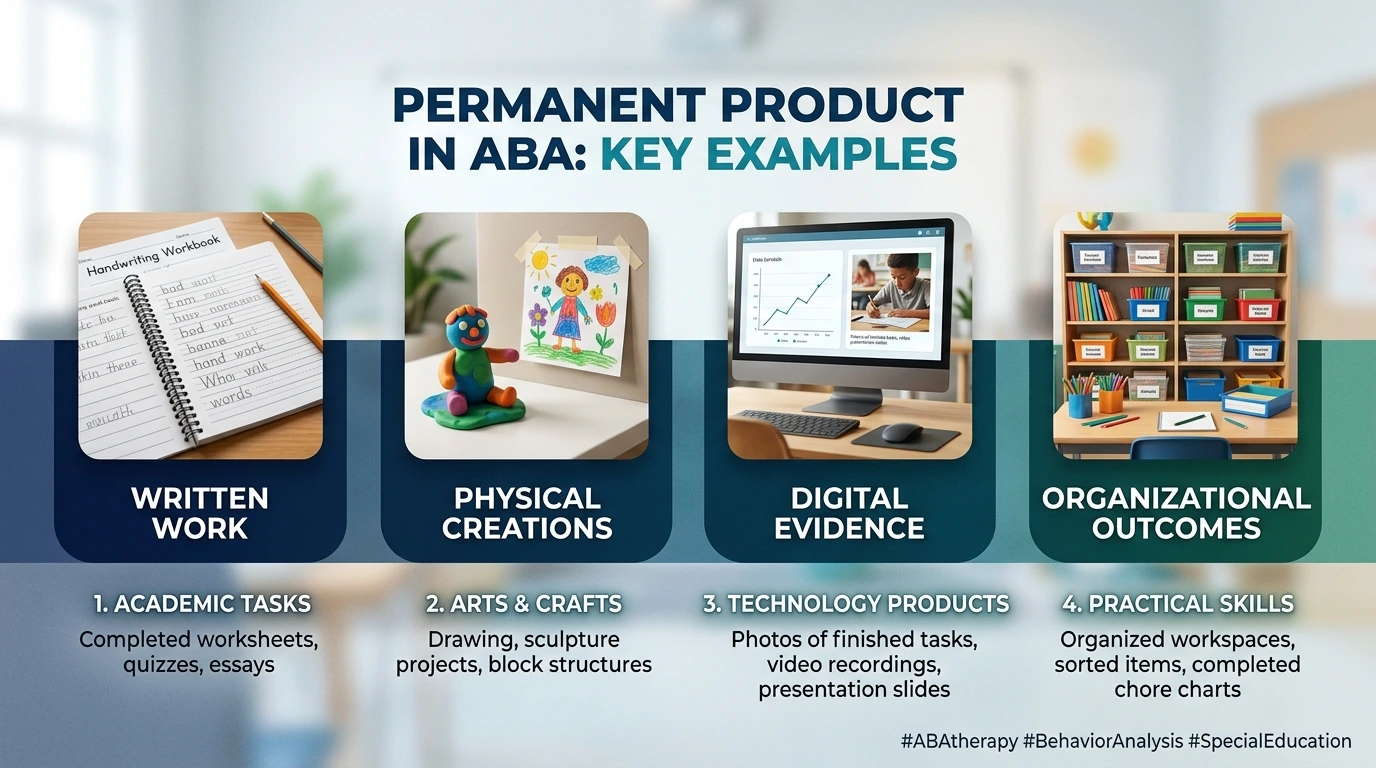
Permanent product recording can be used in many ABA therapy activities to assess a child’s progress by reviewing completed work. It also helps therapists to see tasks like worksheets, drawings or daily activities. These results show that how a child is learning and improving over time.
Counting Objects
Counting objects is an easy example of permanent product recording in applied behavior analysis. It helps therapists assess a child’s counting, sorting, and focus skills by examining the final work. The number of correct items shows the child’s progress and helps therapists understand how well the child follows instructions and completes tasks.
Reciting Words
Reciting words is a simple example of permanent product recording in ABA therapy. It helps therapists assess a child’s language skills by counting the words they can remember, say, read, or correctly recognize. This information shows how a child’s vocabulary is improving and helps therapists set new language goals based on the child’s progress.
Drawing Shapes
Drawing shapes is an easy example of permanent product recording in ABA therapy. It helps therapists check a child’s hand skills, attention, and ability to follow instructions. By reviewing finished drawings, therapists can assess progress in shape learning, drawing accuracy, and visual skills. This helps them make better goals for the child’s learning.
These drawings are saved records that help show how a child’s skills improve over time.
How to Implement Permanent Product Recording?
To use permanent product recording, an ABA therapist can follow simple steps to collect and review a child’s progress. This method helps therapists check completed work and understand how well a child is learning new skills. Setting clear goals and regularly reviewing results make therapy plans more effective.
Define the Target Behavior: First, decide which skill or behavior to measure, such as drawing shapes, writing words, or sorting objects. A clear goal helps collect useful information.
Identify Permanent Products: Choose the completed work that shows the child’s performance, such as worksheets, drawings, or organized items.
Set Recording Criteria: Create simple rules to measure success, such as counting correct answers, completed tasks, or accurate responses.
Collect and Review Data: Check the finished work, record the results, and use the information to track progress.
Using permanent product recording helps an ABA Therapist support a child’s growth and create better learning plans.
Tools and Materials for Permanent Product Recording
To use permanent product recording, therapists need simple tools and materials to collect and check information. These tools help keep records clear and show a child’s progress over time.
Recording Sheets: Forms or digital sheets help therapists write down results and keep data organized. They make it easier to check progress.
Counting Tools: Items like counters and tally sheets help students count correct answers during activities such as sorting, counting, and matching.
Recording Equipment: Cameras and audio recorders help capture videos or audio of activities, such as speaking, for later review.
Evaluation Rubric: Checklists help therapists check the quality and accuracy of completed tasks, such as drawings or worksheets.
These tools make permanent product recording simple, organized, and helpful for tracking a child’s learning progress.
Understanding Permanent Product Recording Data
After collecting and recording permanent products, the next step is to review the data or assess the child’s progress. An ABA Therapist reviews the child’s completed work to identify which skills are improving and where the child needs more support. This helps the therapist plan better activities for future sessions.
For example: if a child needs to count 10 objects but correctly counts only 8, it shows that the child is learning but needs more practice. The therapist uses this information to adjust activities and provide appropriate support. If the child learns a skill quickly, then the therapist can add harder tasks. If the child has difficulty, the therapist can make tasks easier or give extra help to support progress.
Embracing Permanent Product Recording for Progress and Success
Permanent product recording is a simple way to track a child’s progress in ABA therapy. It helps therapists understand a child’s skills by looking at completed work such as drawings, written activities or other finished tasks. This method shows how a child is improving and helps find areas where more practice may be needed.
By collecting accurate information, families and professionals can work together to support learning, communication or independence. An ABA therapist can use this method just to create learning plans that match a child’s needs and goals.
Parents also help their child make progress outside therapy sessions. Resources like ABA Strategies for Parents can teach families easy ABA techniques to use at home. By noticing small improvements and celebrating achievements, permanent product recording helps children build confidence or develop important daily skills.