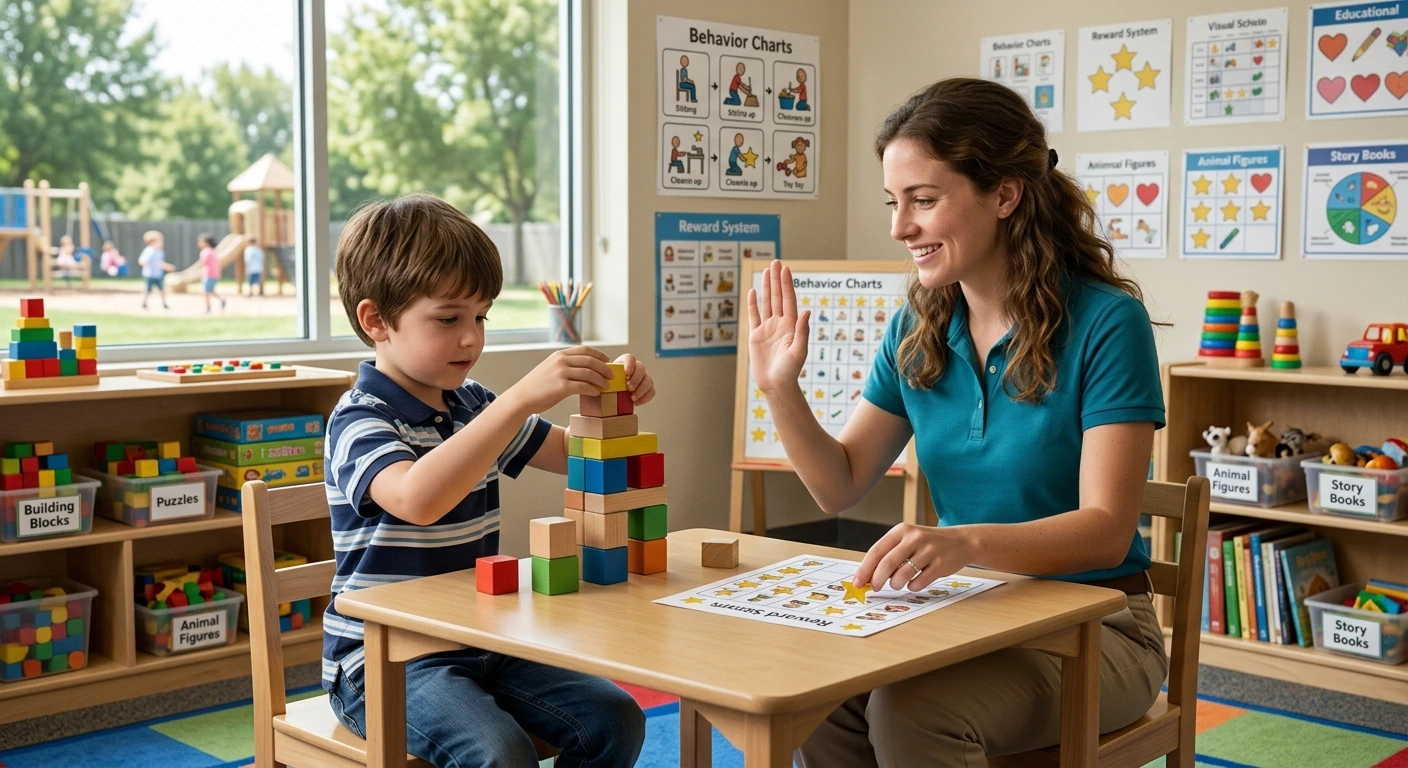
Are you watching for easy ways to support your child’s learning at home? Many parents use ABA strategies for parents to support children speaking better, focus more, becoming independent or displaying good behavior. Applied Behavior Analysis (ABA) teaches skills step by step and rewards minor progress. This supports children’s learning clearly.
In this content you will learn what ABA is, why it works well or how parents can use it. You will also learn practical ABA techniques for parents and simple ways to support learning and development at home using everyday routines or real-life examples.
What Are ABA Strategies for Parents?
Applied Behavior Analysis (ABA) is a simple way to teach children new skills and improve their behavior positively. It helps parents know how children learn and how behavior can be improved step by step. ABA approaches for parents use encouragement, routine or consistency to guide children in the correct direction.
One significant part of Applied Behavior Analysis strategies is positive reinforcement which means that giving a reward or praise when a child does something good so they repeat it. Parents can easily use these approaches at home in everyday activities without any specialized tools or a classroom. ABA techniques for parents can be used in usual routines like eating, playing, studying or doing housework. This supports children learning slowly but in a steady way with support and practice.
ABA strategies for parents can help in:
- Communication skills
- Social skills
- School learning
- Everyday life skills
- Independence and confidence
ABA methods for parents make learning easy, natural and part of everyday life, helping children grow with better behavior and sureness.
Why ABA Strategies Help Children Learn More Effectively
Children know better when lessons are simple, clear or practiced various times. ABA (Applied Behavior Analysis) supports children in learning new skills step by step in an easy way. It uses practice, rewards and clear guidance to teach successfully. Repetition means doing the same activity repeatedly until the child fully learns it.
Reinforcement means giving praise or rewards when the child does something correctly which helps them learn faster. Structured teaching means giving simple and direct directions so children clearly know what is expected. These approaches help children recover attention, memory or sureness. They also support independence and lessen stress throughout learning. When parents and teachers use the same method at home and at school so children receive consistent support or learn more easily over time.
Key ABA Strategies Parents Can Use at Home
1: Positive Reinforcement
Positive reinforcement means giving a reward exactly after a child does something good. It supports children in learning what is correct and makes them need to repeat good behavior. Rewards should be easy, simple and meaningful for the child.
Examples include:
- Saying good job
- Giving stickers
- Playing with preferred toys
- Additional play time
- Small treats
Parents can use this when children:
- Do homework
- Listen to directions
- Talk and communicate
- Finish everyday chores
When children get rewards fast, they know better and keep repeating good behavior.
2: Breaking Tasks Into Smaller Steps
Great tasks can feel hard and unclear. ABA uses a technique called task analysis. This means breaking large tasks into smaller, easier steps.
Example: Getting dressed
- Put on socks.
- Put on pants.
- Put on a shirt.
- Put on shoes.
Other examples:
- Picking up and cleaning toys
- Doing school homework
- Making the bed
- Brushing teeth
This helps children know what to do step by step and makes learning easier.
3: Prompting and Guidance
Prompts support children in learning new skills. There are different kinds of prompts:
Verbal Prompts
These are spoken hints, like:
- Pick up your book
- Say thank you
Visual Prompts
These are things you can get, such as:
- Pictures
- Charts
- Checklists
- Flashcards
4: Physical Prompts
This is gentle assistance with actions such as guiding a child to hold a toothbrush correctly.
As children get better, parents should gradually give less help. This helps children become more independent and do tasks on their own.
5: Consistent Routines
Routines mean doing things in the same order each day. This helps children feel calm and safe.
Examples:
- Morning routine
- Homework time
- Bedtime routine
- Meal times
When children anticipate what will happen next then they feel less concerned or can learn more effectively. Doing things the same way each day also offers more chances to practice skills.
ABA Techniques for Building Communication Skills
Communication is very significant for a child’s growth. Many ABA approaches for parent’s help children learn to express their thoughts and needs more effectively.
Encouraging Requests
Helping children ask for things is vital for communication. Parents can teach children to question for help, request items they like or tell their requirements in a simple or clear way. ABA techniques use practice and rewards to help children learn these skills step by step.
Modeling Language
Parents can model correct word use for children by speaking clearly and slowly in everyday life. When children hear the right language repeatedly then they learn to use it. This supports improving speaking and understanding.
Expanding Conversations
Children should be encouraged to take turns while talking, answer simple queries and share what they think or feel. This helps them talk better with others and builds confidence.
Regular practice at home strengthens communication. With time, children become better at speaking, understanding and using language in normal situations.
Using ABA to Improve Attention and Focus
Attention is very important for school and everyday life. ABA learning strategies help children stay focused, listen to directions or finish their work more easily. These approaches teach in small, simple steps so children can learn more effectively.
Useful Strategies:
1: Short Learning Sessions
Children learn better when sessions are short. Practicing for 5 to 15 minutes helps them stay focused and avoid exhaustion.
2: Clear Instructions
Simple directions are easier for children to know.
Examples:
- Put your shoes away
- Open your book
- Write your name
3: Reinforcement for Staying on Task
Praise and rewards help children stay focused and complete tasks.
Examples:
- Finishing homework
- Reading for 10 minutes
- Helping at home
Parents can gradually make tasks a little harder as attention recovers. Minor steps help children build better focus, self-control and independence over time.
ABA Strategies for Teaching Independence
Teaching independence is very significant in ABA.
Daily Life Skills
Parents can teach children significant skills like:
- Brushing teeth
- Washing hands
- Having things in place
- Folding and putting away clothes
- Making simple snacks
These skills help children feel more confident and responsible.
Self-Management Skills
Children can learn to:
- Use checklists
- Check their own progress
- End work by themselves
- Notice what they have done well
Learning independence benefits children in school, at home and when they grow up.
Common Mistakes Parents Should Avoid When Using ABA
ABA (Applied Behavior Analysis) supports children in learning new skills and changing behavior. But some errors can slow down progress. Parents should be aware of these mistakes to better support their children’s learning.
Inconsistent Reinforcement
Sometimes parents offer rewards, but sometimes they don’t. This can confuse children. When rewards are given consistently, children know what behavior is right and repeat it more frequently.
Expecting Immediate Results
Learning takes time. Children do not recover overnight. Parents want to be patient and keep practicing habitually. Small progress will grow over time.
Using Reinforcement Ineffectively
Rewards should be given immediately after good behavior. There should be something the child likes and that matches the effort put in. If rewards are delayed or not vital, they may not work well.
Focusing Only on Challenges
Parents should not only face problems. They should also notice and praise good behavior and achievements. This supports children feeling confident and motivated to learn more.
How to Make ABA Activities Fun and Engaging?
Learning should be enjoyable. Many parent-led ABA activities can be turned into games and family involvement.
- Learning through play supports children’s learning with games like matching, sorting and building blocks.
- Storytelling benefits improve speaking, listening, imagination and communication skills.
- Reward activities make learning exciting using toys, music, outdoor play and praise.
- Family activities make learning more exciting and help build strong bonds at home.
Fun ABA activities support children to join in more and feel less stressed. They make a positive learning environment where children enjoy learning.
When to Seek Professional ABA Support
Sometimes parents want help from ABA professionals to support their child’s learning and development. Parents should seek professional assistance if a child has learning problems, communication difficulties, and behavioral problems or is slow to reach developmental milestones. ABA experts assess the child’s desires and understand their strengths and challenges.
Then they make a simple, personal learning plan for the child. They also teach easy and actual ways to recover behavior or communication. Professionals also guide parents on how to use ABA methods at home. Working with therapists and teaching aides creates a stable, supportive environment for the child’s growth and learning.
How Parents Can Support Long-Term Learning Success
Long-term learning success happens when parents offer steady support each day. When families use ABA strategies for parents, children learn better at home in simple ways. Parents should stay patient, be consistent or practice skills every day for better improvement.
- Praise and reward good behavior to encourage children and build their confidence.
- Set small and easy objectives and repeat everyday routines to recover learning skills.
- Check progress often to get feedback and support for changes when required.
- Work with teachers and therapists so everybody supports the child in the same way.
Overall, using ABA approaches for parents helps children recover communication, independence, attention or behavior and leading to long-term learning success.
Conclusion
To sum up that parents have a very significant role in helping their child grow and learn. Applied Behavior Analysis strategies help children to recover communication, independence or good behavior simply. ABA learning strategies support consistent practice, enabling children to learn skills step by step. Using ABA at home makes learning easier by incorporating it into everyday routines.
ABA strategies for parents give families easy tools to support their child with patience and care. Every day, daily efforts create meaningful progress over time in communication, focus or independence. With patience and support each child can continue to improve and learn new skills.