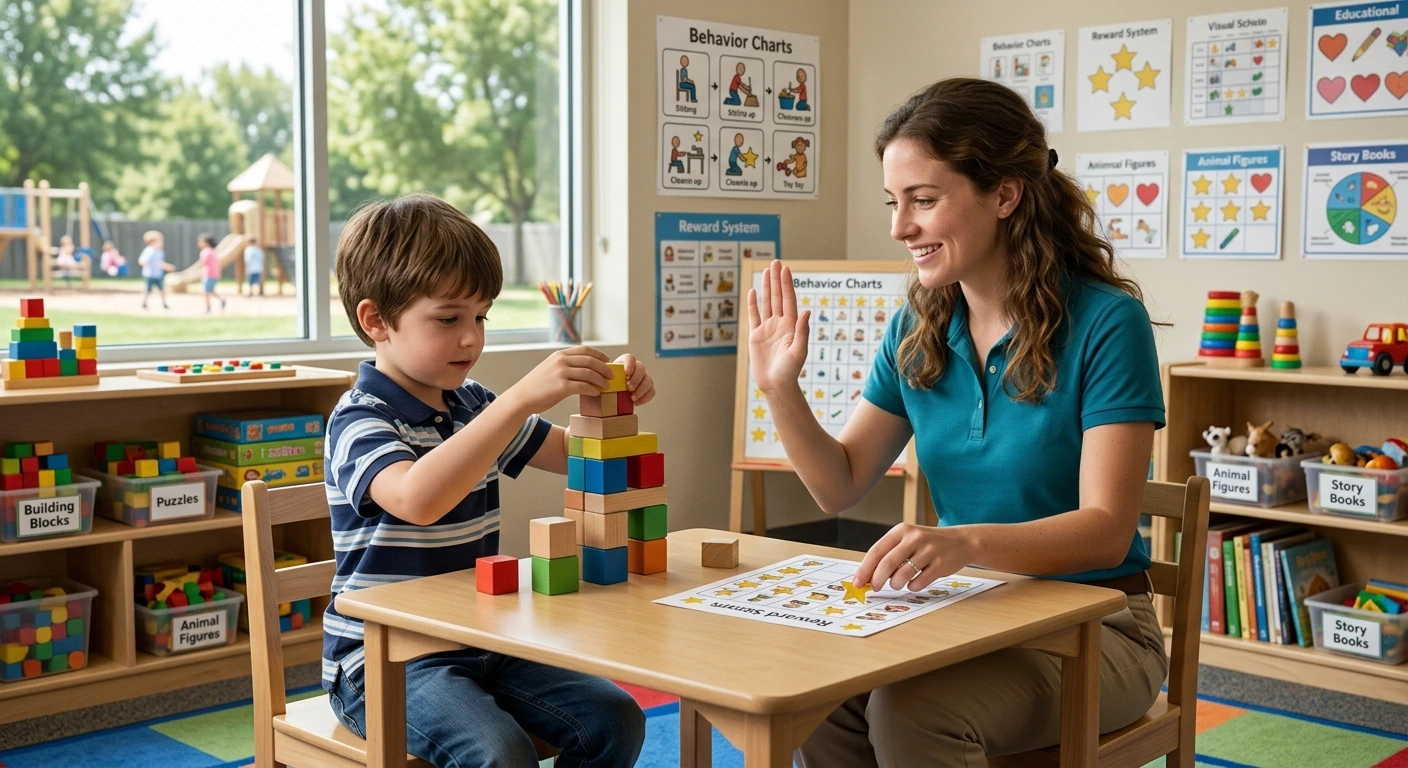
If your child has just been diagnosed with ASD, there is no doubt you have heard about ABA therapy techniques. It has become quite common for doctors and early childhood experts to recommend this therapy as the initial and most reliable support for children diagnosed with autism spectrum disorder.
As a result, ABA therapy uses empirically based techniques to instill correct behavior. It also includes handling matters such as communication, socialization, self-care, fine motor coordination, and preparation for entry into school.
The same principles apply when working with older children and even adults to teach new skills, such as job searching and cleaning the room.
History of ABA Therapy
Everyone who has ever had to sit through an introductory psychology course certainly remembers the scientist B.F. Skinner. Skinner is famous for his findings, which were used to develop ABA therapy. He created the concept of operant conditioning, which holds that changing the consequences leads to a change in behavior.
Reward the behavior; the individual performs it again; introduce an unpleasant consequence; and they slowly stop the behavior. Parents themselves apply the same technique on a daily basis by rewarding a certain behavior in a child and imposing an unpleasant consequence for another.
ABA therapy techniques just make this process more structured, evidence-based, and measurable for a Board Certified Behavior Analyst (BCBA). To provide you with a better understanding of how an ABA therapy works with your child, we will look at the main techniques used by ABA therapists.
ABA Therapy Techniques
This is where you will discover some of the most frequently used ABA therapy techniques practiced by certified professionals today. Just one important reminder before moving forward: there are no two identical kids on the autism spectrum.

The plan is always tailored to your child’s individual strengths, weaknesses, and unique character. There are those who respond well to rewards. Some might require a peaceful environment. For others, a bit more activity is needed.
And that is the entire idea behind the treatment: the plan should adapt to your child, rather than vice versa. Now, here is the explanation of each technique to help you understand what to expect from the therapy sessions.
Positive Reinforcement
Positive reinforcement is one of the most effective ABA therapy techniques. As the term suggests, it means only one thing: rewarding a certain behavior immediately after it is performed. Timing matters most.
A quick “Great job!” the second your child says “please” links the word and the reward in their mind. Wait too long, and the connection fades.
Your BCBA teams up with you to pick the right reward. It can be anything, like their favorite food, extra time on the tablet, a high-five, or even a compliment. Assume your kid usually takes toys without asking.
In this case, the ABA therapists in Utah train them how to ask, “Can I have that?” and get the toy right away. That instant payoff drives the lesson home. Over time, your child chooses to use words rather than grab without even thinking about it.
Discrete Trial Training
Discrete Trial Training (DTT) is at the core of ABA. The therapist will break down a complex skill into smaller parts that can be taught separately. Each bit is taught individually, and all correct responses get reinforcement.
Take emotions as an example. A therapist teaching your child to recognize feelings won’t tackle happiness, sadness, and anger all at once. They start with happiness. They might spread out photos of kids showing different faces and ask, “Which one is happy?” When your child points at the smiling child, praise comes right away.
Once your child masters happiness, the therapist moves on to sadness, then anger, then fear. After all the basic emotions are clicked, the therapist raises the bar, maybe by asking your child to name each emotion out loud.
Each small win stacks on the last, and slowly your child builds one full skill from many tiny lessons.
Antecedent-based Interventions
To understand the logic behind antecedent-based interventions (ABIs), one must first consider how ABA views the process of learning. This particular ABA treatment method divides each learning instance into three distinct components: Antecedent, Behavior, and Consequence, commonly abbreviated as ABC. The behavior is triggered by something and then results in some consequence.
The problem is complicated when the environment acts as an obstacle. Children diagnosed with autism tend to respond to auditory, olfactory, and visual stimuli that other kids overlook.
Even the sound of whispering across the classroom can distract the child’s attention from what the teacher says, causing the child to miss the antecedent entirely.
ABI shifts the environment to remove those distractions. Your therapist may set up a quiet space with few visual triggers. They may offer your child choices instead of demands. They may also bring toys your child loves into the session to boost motivation.
Aspects of ABI include:
- Reshaping the learning space
- Offering choices
- Using items your child already loves
Here’s a classic ABI move: instead of handing your defiant child one worksheet, the therapist offers three and asks, “Which one do you want to start with?” That small switch often turns a battle into a smooth win.
Exercise
You might raise an eyebrow when you see your therapist rolling a ball across the floor or leading your child through stretches. But exercise falls squarely within ABA therapy techniques for a reason. Movement doesn’t just build muscle. It shifts brain chemistry, mood, and focus in ways your child can feel almost right away.
Exercise can:
- Boost your child’s mood and happiness
- Create the calm they need to sit and learn
- Reduce physical discomfort
- Improve sleep at night
- Draw out social and verbal engagement
- Sharpen memory
- Strengthen gross motor skills through large-muscle play
- Build fine motor control needed for writing and buttoning shirts
Your therapist may kick off a session with a quick ball toss or a jumping game. Or they might pause a tough lesson with a stretch break to reset your child’s focus. Small bursts of movement often unlock big learning moments.
Extinction
Although the term extinction may seem harsh, it only implies one thing: the behavior no longer receives reinforcement from the therapist and thus disappears. The choice of the strategy depends on understanding what triggers the behavior. Attention is usually the reinforcing factor.
Your kid makes a scene at the dinner table, and all family members run to them. This is an incentive for their screaming. Certain behaviors are reinforced by their ability to avoid undesirable situations.
Your kid is throwing a tantrum when asked to do homework, and the teacher gives them time in a calm corner. The corner seems better than the worksheet. So, your kid keeps doing it. Some behaviors even reward themselves.
A child who rolls the car window up and down over and over may love the rush of wind on their face. The sensation itself is the payoff. Whatever fuels the behavior, the therapist removes that fuel. Screaming no longer earns attention.
The worksheet still waits after the tantrum. Over time, your child realizes that the old behavior no longer works and lets it go for good.
Functional Behavior Assessment
A Functional Behavior Assessment, or FBA, is where every solid ABA plan starts. Your therapist uses it to spot the exact behaviors that need work, dig into why those behaviors happen, and pin down what keeps them going. The FBA becomes the blueprint for every technique the therapist chooses next.
To build the FBA, your BCBA watches your child in real settings, at play, during meals, or in class. They also talk with you, teachers, and doctors to piece together the full picture. This step matters.
The Behavior Analyst Certification Board requires every BCBA to base treatment plans on data-driven assessments like this one, not on guesswork.
Functional Communication Training
Functional Communication Training (FCT) is one of the most productive ABA therapy techniques that teaches your child to replace rough behavior with a clear way to say what they need. It leans on differential reinforcement, rewards the good, and ignores the not-so-good.
FCT usually rolls out in these steps:
- Study the problem behavior
- Pick a better way to communicate
- Teach the new skill
- Reward every use of it
- Remind your child to use it
- Ignore the old behavior when it pops up
Say your child throws pencils when frustration builds. The therapist teaches them how to say “I am frustrated” instead. If your child cannot speak yet, they will learn to use a gesture that represents this phrase. In either case, your child finds their voice, and no one needs to write anymore.
Modeling
Modeling involves teaching through example. Your therapist acts out the ideal behavior so your child can watch, copy, and learn.
Now consider an example of holding a pencil. In addition to simply saying, “Holding it in such a manner,” the therapist demonstrates exactly how they place their fingers on the pencil and press it against the paper.
Children learn a substantial portion of the world through such imitation. Modeling simply puts that natural learning style to work inside therapy sessions.
Parent-implemented Intervention
ABA techniques or strategies work best when parents step in as everyday coaches. Parent-implemented Intervention (PII) trains you to use ABA strategies at home. Your BCBA teaches you the moves, watches you practice, and gives feedback so you feel confident.
Research from the National Institute of Child Health and Human Development shows PII really works. Kids on the spectrum often learn faster in their own kitchen or backyard than in a clinic room. No new smells, no strange faces, no anxiety about the drive.
PII also fills a real gap. Waitlists for ABA services can stretch for months, and every week matters when your child is young. When you learn the basics from your BCBA, you start helping your child right away.
And on days a therapist can’t come to the house, you can keep the progress rolling on your own. If you live locally, the team at ABA Therapy Utah builds parent coaching into every plan from day one.
Picture Exchange Communication System
PECS enables children without verbal communication to express themselves. They give a picture card to their caregiver requesting things like snacks, toys, or rest. A very simple concept that has helped many families communicate effectively.

Several studies conducted by Autism Speaks have demonstrated that PECS helps children develop language skills and reduces misunderstandings that cause tantrums. A child who is unable to request a cracker will scream for it, while a child who has a cracker picture card will simply hand the card.
During snack time, for instance, your child will go through a book with pictures of various foods, choose the yogurt picture card, and give it to you. You will then give your child the yogurt. They eat. Everyone stays calm.
Pivotal Response Training
Pivotal Response Training, or PRT, adds an element of play into the classic ABA method. The underlying concept behind this therapy is that some skills are pivotal to the development of many other skills. When a person learns these few pivotal skills, others become easy. There are three main pivotal skills.
PRT usually happens through games. If your child is learning to ask for toys during a play session, the therapist rewards every “Can I have the truck?” As that skill locks in, you’ll notice your child start asking for other things, too, a cookie at home, a turn on the swing at the park, a hug at bedtime. One core skill spreads into many everyday wins.
Redirection
Redirection is a tool almost every parent has already tried without knowing the name. When your child slides into a problem behavior, the therapist gently pulls their focus toward something better before things escalate.
Say your child hits a peer to get their attention. Your therapist taps your child on the shoulder or steps in with a quick prompt. The hitting stops. Then the therapist coaches your child to say, “Excuse me” instead. Now your child has a clean, socially smart way to grab attention.
Scripting
Scripting hands your child a set of ready-made words for a specific moment. The therapist writes a brief script, practices it with your child, and continues repeating it until it becomes automatic for him/her. “Look at the person you are talking to” can be a part of your life from now on, thanks to a small script like that.
The scripts work well before important social events, such as a birthday party, the first day of school, a doctor’s visit, and any other moment when your child needs to interact with others. After your kid learns the script well, the therapist begins to fade it out gradually so the skill is used automatically and doesn’t require any reminder.
Every child develops differently, and the most effective ABA therapy techniques help them reach their goals step by step, starting from their current developmental level. If you are based in Utah and need a team that treats your child not only as a patient but as a whole person, Reach Higher ABA, with a team of licensed BCBAs, will create an individual plan for your family. Contact us now for a free consultation.