
Hyperphagia in Autism is a condition where a person may have a very strong urge to eat or think about food more than normal. It can be found in some individuals on autism spectrum.
Autism itself doesn’t directly cause overeating but some people may display eating patterns like continuous interest in food, not feeling full easily or selecting strict food routines. These patterns can vary from person to person so families and caregivers should carefully understand them.
This behavior isn’t always about hunger. It can be related to sensory sensitivities or anxiety, habits or difficulty controlling impulses. As autism can affect to communication, then a person may not clearly express hunger or fullness so additional attention is required to support healthy eating habits.
Early Signs of Hyperphagia
Knowing to the Early Signs of Hyperphagia is key to getting help timely. It helps parents and caregivers notice uncommon eating habits in children. These signs can start gradually and may change everyday eating routines. Early understanding can help avoid from health problems and support better growth.
- Each time watching for food or snacks
- Getting upset when food isn’t available
- Eating too fast or not chewing food well
- Not stopping eating even later meals
- Each time thinking or talking about food
Finding to these signs promptly helps make better meal plans and healthy routines. It helps children stay healthier and avoid future eating-related complications.
Mealtime Challenges in Autism
Mealtime Challenges in Autism occur because some individuals experience food differently. They may not like certain foods due to their texture or smell, color or temperature. Many prefer to eat only a few familiar foods and may refuse to try new ones which limits their food choices. Mealtimes can also feel difficult because of anxiety or changes in routine and worry about sitting still for long time.
When hyperphagia is too present, the challenges can become stronger as the person may need the same foods over and over in large amounts. Having mealtimes calm or simple and well-organized can help lessen to stress and make eating easier.
Research on Overeating in Autism
Research on overeating in autism is still growing. The studies display that eating habits in autistic people can be affected by various things such as changes in how the brain works, sensitivity to sounds, smells or textures and learned habits. Some people may not clearly feel hunger or fullness.
Others may eat to feel calm, follow routines or deal with stress and anxiety. Some may focus too much on food or food-related actions. However, not everybody with autism overeats. Many people may eat only a small number of foods. This displays that each person needs to be understood and supported individually.
Investigating Overeating Behavior
Investigating overeating behavior means trying to know that why a person eats too much. It looks at feelings or surroundings and habits instead of just focusing on food. Professionals observe daily patterns that may lead to overeating. This supports the finding of better or long-lasting solutions. Watching the behavior over time helps find patterns that may not be caught in short checks.
- Feeling upset, concerned or bored
- Easy availability of food around the person
- Repeated everyday habits that encourage eating
- Difficulty in expressing desires or feelings
- Using food for ease or sensory needs
Support plans should be made for every person or followed habitually and guided by professionals for the best effects in daily life.
Link Between Selective Eating and Overeating
Selective eating and overeating can be related to autism, even though they look different. A person may eat just a few foods and refuse many others. But when they get their preferred food then they may eat a lot of it. It can happen as they prefer certain tastes or textures, feel concerned about new foods, have limited food choices or don’t know portion sizes or when they are full. For example, a child may avoid from most foods but eat too much of one preferred snack. Over time, this can disturb health so slowly adding new foods and keeping consistent meal times can help.
Hyperphagia in Prader-Willi Syndrome
Hyperphagia in Prader-Willi Syndrome is a condition in which a person feels a very strong or constant hunger due to a problem in body’s appetite-regulating system. They may continue eating even after finishing a full meal and may not feel full. It can lead to health complications like weight gain and diabetes. Due to this, these individuals want close supervision for stay safe. The meals are typically planned and controlled to help manage eating. Having a consistent routine and limited access to food can too lessen stress and overeating. An early help and guidance for caregivers are key for better care and long-term safety.
Hyperphagia in PWS
Hyperphagia in Prader-Willi Syndrome (PWS) refers to a persistent, intense feeling of hunger. A person may feel like they want to eat all the time even after having enough food. This happens because the brain doesn’t send normal signals for fullness.
Key points:
- At all times thinking about food
- Watching for food even after eating meals
- Not feeling full easily
- Getting very upset when food is limited
Because of this, people with PWS require a safe routine, controlled access to food and consistent medical care to stay healthy and safe.
Ghrelin Hormone and Appetite
Ghrelin is a hormone made in the stomach that controls hunger. It tells the brain when the body wants food so it is also called the “hunger hormone.” When ghrelin levels go up then a person feels hungry. When they go down then the feeling of hunger decreases. In some health or genetic conditions, this system does not function properly so that a person may feel hungry more frequently or more intensely. Learning about ghrelin benefits scientists by helping them understand why some people overeat and find better methods to control appetite and support healthy eating habits.
Managing Hyperphagia Symptoms
Managing hyperphagia symptoms means following to regular routines and simple steps to control very strong hunger and overeating. It supports making a clear structure or decreasing food triggers and building healthy eating habits over time. These steps help a person feel calm or harmless and less concerned about food.
- Having fixed meal and snack times
- Not having food available all the time
- Using minor and controlled portions
- Giving healthy and filling meals
- Providing emotional support and other coping actions
In autism, keeping routines same is key because changes can raise stress and anxiety.
The slow and gradual changes in eating habits are better and easier to follow. Support from caregivers and health experts can help improve to everyday food management and safety.
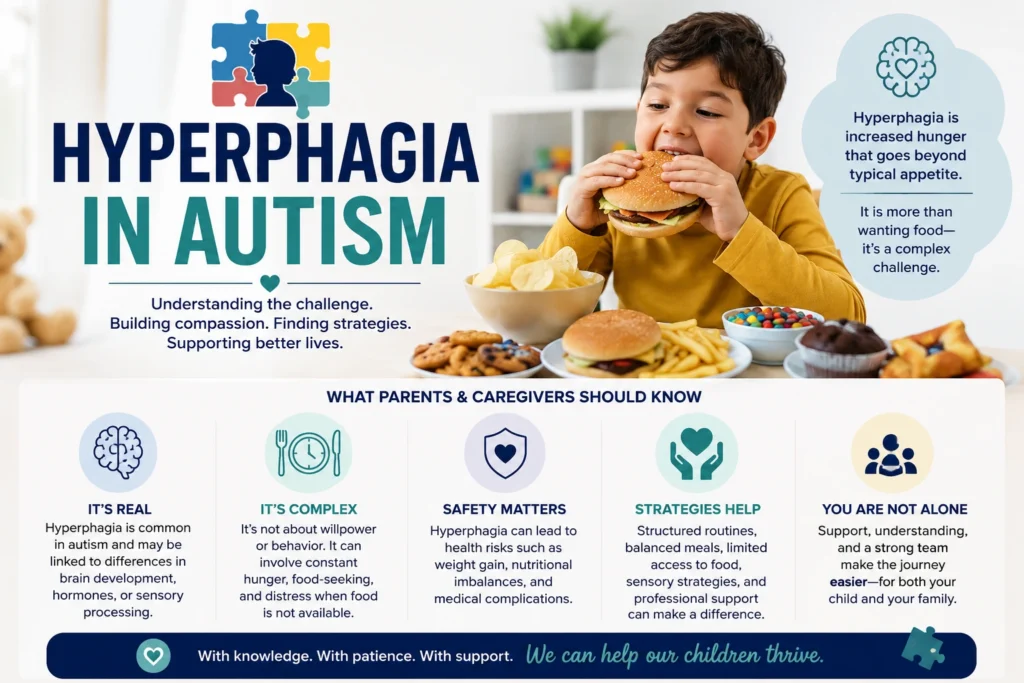
Strategies for Managing Hyperphagia
Managing hyperphagia means using simple regular plans and behavior support. It helps people manage intense hunger and gradually develop healthy eating habits. Consistent routines and fixed meal plans help lessen overeating and food anxiety.
- Using picture charts for meal times
- Teaching how to wait and not eat instantly
- Drinking more water to lessen extra snacking
- Giving food choices that match sensory needs
- Giving rewards that aren’t food for good behavior
Behavior therapy such as Applied Behavior Analysis helps people develop self-control or improve communication in everyday life. These methods together help reduce the stress about food and improve the day-to-day quality in life.
Importance of Careful Eating Management
A careful eating management is very significant when a person has hyperphagia. Without a correct structure, a person may eat too much which can lead to health complications like obesity or diabetes and stress. Good planning helps control hunger and supports healthy food selections each day.
It also makes eating times clear or calm and easy to follow. The families and caregivers can help more when routines are fixed. For people with autism, eating support should be kind and individual. The goal isn’t just to limit food intake, but to establish safe and steady routines. It helps one person feel comfy or less worried and develop healthy eating habits over time with care, patience or support.