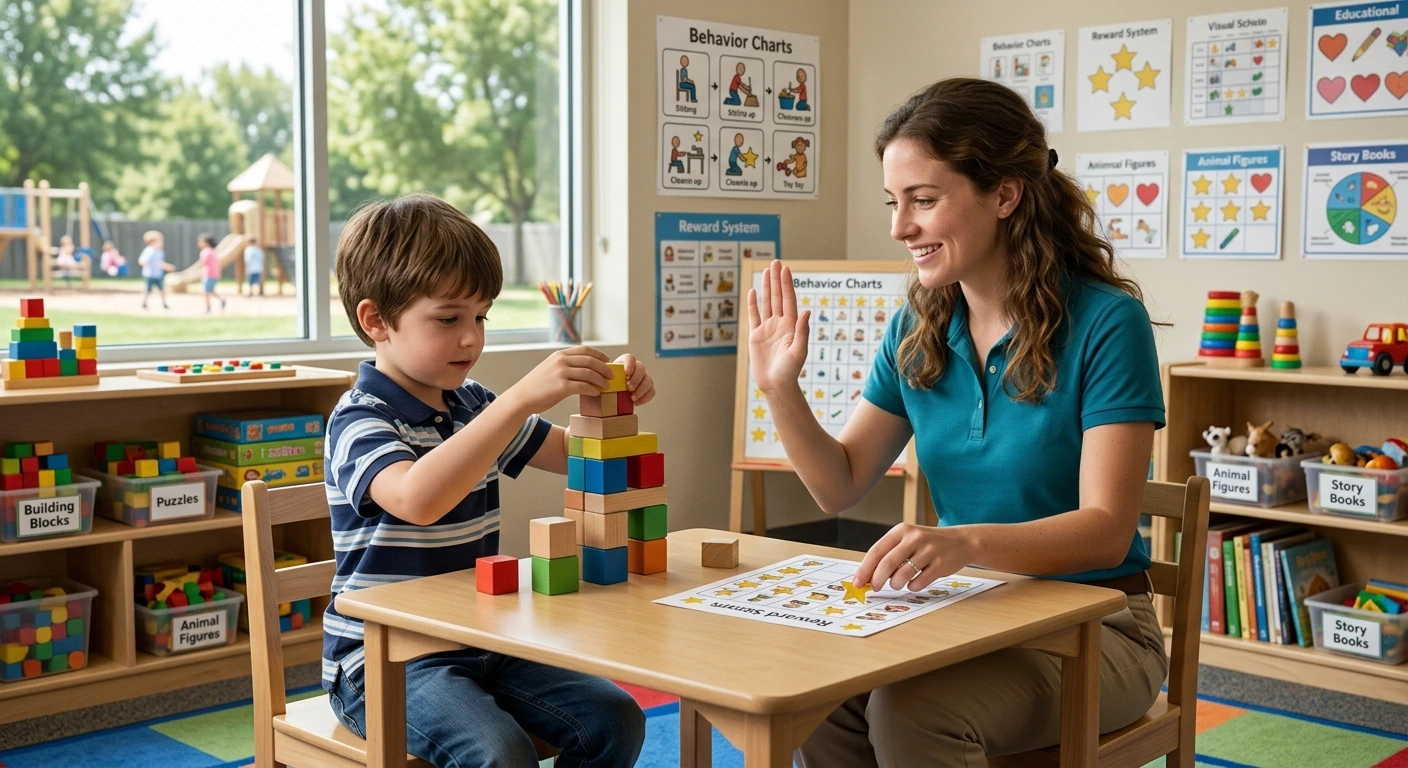
It takes time to teach a new skill, especially when you are working with children who require an extra support with learning, verbalizing, or daily activities. Applied behavior analysis (ABA) involves the use of a variety of teaching strategies to help children learn in a step-by-step manner.
Applied behavior analysis Utah uses a variety of teaching strategies to help children learn step by step. These strategies begin with support and prompts to help the child do something he or she can do successfully. This way, the child gets more confident and proficient until he or she can perform the task on his or her own. In this blog, we will look at the various types of prompts in ABA and how to promote learning at home.
Understanding prompting in ABA therapy in Utah
Prompting is a strategic way to teach children a desired behavior at an early stage of learning. This is done to ensure that the child is learning properly and quickly. In this way, they learn and gradually develop confidence in activities and become independent. Once the technique is successful, fading techniques are adopted to fade out prompts.
The Continuum of Prompting: From Most to Least Intrusive
Part of the ABA teaching process is called most-to-least prompting, which means that the child receives the most assistance when learning a new skill and, as the skill is mastered, is given less assistance. With time, this assistance is slowly withdrawn, and the child becomes independent.
The overriding principle is to help the child succeed rather than make the same mistake more than once or be frustrated again.
For example, if the child is learning how to brush his or her teeth, the therapist might give them complete physical directions. The therapist gradually reduces the level of prompts as the child gets better until the child can perform the routine without any prompts.
Why Is This Method Effective?
Frequently, children learn best when they are successful from the start. The most to least prompting strategy will minimize confusion and increase confidence as the child is unlikely to make repeated mistakes.
This technique can assist children to:
Perform and learn new skills faster
- Build confidence
- Reduce frustration
- Improve independence
- Develop consistent routines
It is frequently used in Utah homes, classrooms, and ABA therapy settings.
Along with most-to-least prompting, there are many other prompts as well, such as:
1. Physical Prompting: Full Physical and Partial Physical
Physical prompting is using your physical body to help the child complete the task. This is typically the most effective prompt and is often used when introducing a completely new skill. For example, if you want a child to put their things away properly, you have to act that way.
There are two different standards:
- Full Physical Prompt: The therapist fully prompts the child’s movements.
- Partial Physical Prompt: Therapist offers minimal physical support, and the child performs a greater percentage of the skill.
For example, during the first few sessions, the therapist guides the child’s hands through the steps of handwashing, gently assisting them.
2. Visual Prompts
Visual supports give information that is visually accessible.
These may include:
- Picture cards
- Visual schedules
- Charts
- Labels
- Demonstration videos
For example, a picture schedule helps the child to dress independently. They will see and pick up the steps.
3. Gestural Prompts
A gestural prompt is a gesture or action that is used in place of handholding.
Examples include:
- Using your finger to indicate something.
- Pointing to the right answer
- Put the item in front of the child and ask them to select
For example, a therapist gestures towards a backpack when it is time for the child to go home after therapy.
4. Verbal Prompts
A verbal prompt is a direction, reminder, or question delivered verbally.
Examples include:
- “Take off your shoes.
- When someone gives you a gift, what would you say?
- Before lunch, “Wash your hands.
The use of verbal prompts is useful, but should be faded over time so that the child does not need to be constantly reminded.
5. Using Natural Cues
Therapists start to use natural cues, or prompts, from everyday life as they fade the prompts. Children are helped to use their skills beyond therapy sessions through natural cues.
For example:
- A child needs to be reminded to line up when they hear the school bell.
- They remember to wash their hands when they see others’ hands are soiled.
- When the meal is on the table, a child is reminded to wash his/her hands before eating.
Children learn to respond to natural cues, enabling them to become more independent in the real world. Seeing these in action would be more effective than reading them in a book. It would be better to see these in action in the real lives of children.
Some examples of this strategy’s application in daily life are as follows.
6. Fading Prompts: Moving Toward Independence
Prompt fading is one of the most crucial components of ABA. Prompt fading involves phasing out the amount of help as the skill is mastered. The goal is for the child to complete the task without prompts. Once they learn what to do, you should gradually fade the prompts so that they can be independent and confident.
You can fade these prompts in this manner:
- Full physical prompt
- Partial physical prompt
- Gestural prompt
- Visual prompt
- Verbal reminder
Progress is closely tracked before support is phased out to ensure the child remains successful.
Learning to Put on Shoes
The therapist assists the child in putting on both shoes, first physically, and then again. After some time, the therapist can only assist with the laces. Later, they refer to the shoes, and finally, the child is able to do it by himself.
Asking for a Snack
The child is learning to request a snack. Initially, the therapist gently asks the child to provide a picture card or to verbalize the word. Later, the therapist asks: “What would you like? After a while, the child no longer needs prompting to ask for the snack.
Cleaning Up Toys
At first, the therapist will assist the child with putting toys back in the toy box. This gradually progresses from pointing at the toy box to verbal prompting until the child cleans up independently.
Encouraging Families to Explore ABA Therapy in Utah
Parents/caregivers are very involved in ensuring that the skills children learn during ABA therapy are sustained.
They can support progress by:
- Giving in to the therapist’s plan after it is suggested
- Avoiding unnecessary assistance
- Development of skills in daily activities
- Celebrating independent successes
Final Thoughts
Most-to-least prompting is an effective teaching technique that can help children acquire new skills while allowing them to become increasingly independent. Gradually removing support over time can help build confidence, decrease frustration, and promote long-term success, starting with the appropriate level of support. ABA services Utah helps children learn skills and implement them independently in their daily lives, so they can be independent.